Web — Skroutz · 2020-2021
Small merchants no longer need an XML feed to sell on Skroutz.
A pandemic case study: a manual product upload flow within the Skroutz Partners platform, built during Covid-19 for merchants without technical resources.
- 500+small and medium businesses joined during the pandemic
- 50%GMV growth during the pandemicplatform-wide
Problem
Joining Skroutz required technical know-how: XML feeds, organized product catalogs and digital infrastructure.
When Covid shut physical retail, thousands of small and medium shops needed to get online fast, and the existing tools weren’t built for them.
Role & team
Skroutz was an established company, not a startup. I joined in March 2020 on the Core Product team, then moved to the Partners Product team, the merchant-facing platform.
I worked in a product squad and owned the whole manual upload flow, end to end.
Approach
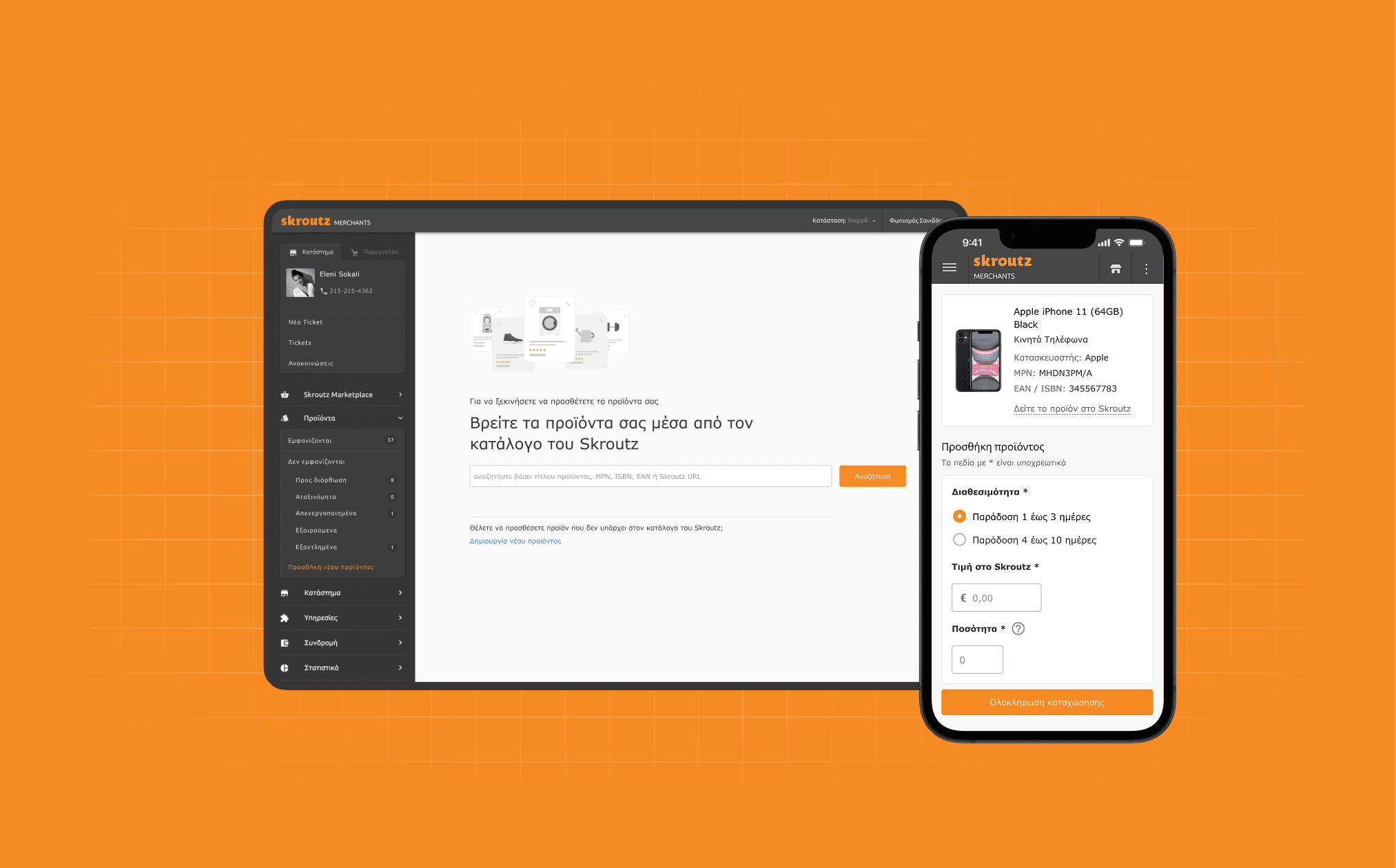
We started by designing an MVP to launch as a first version and build upon.
- 6 moderated usability testsI created the Figma prototypes and a UX research facilitator ran the sessions with merchants, while I observed silently, took notes on their behavior and supported the facilitator with questions.
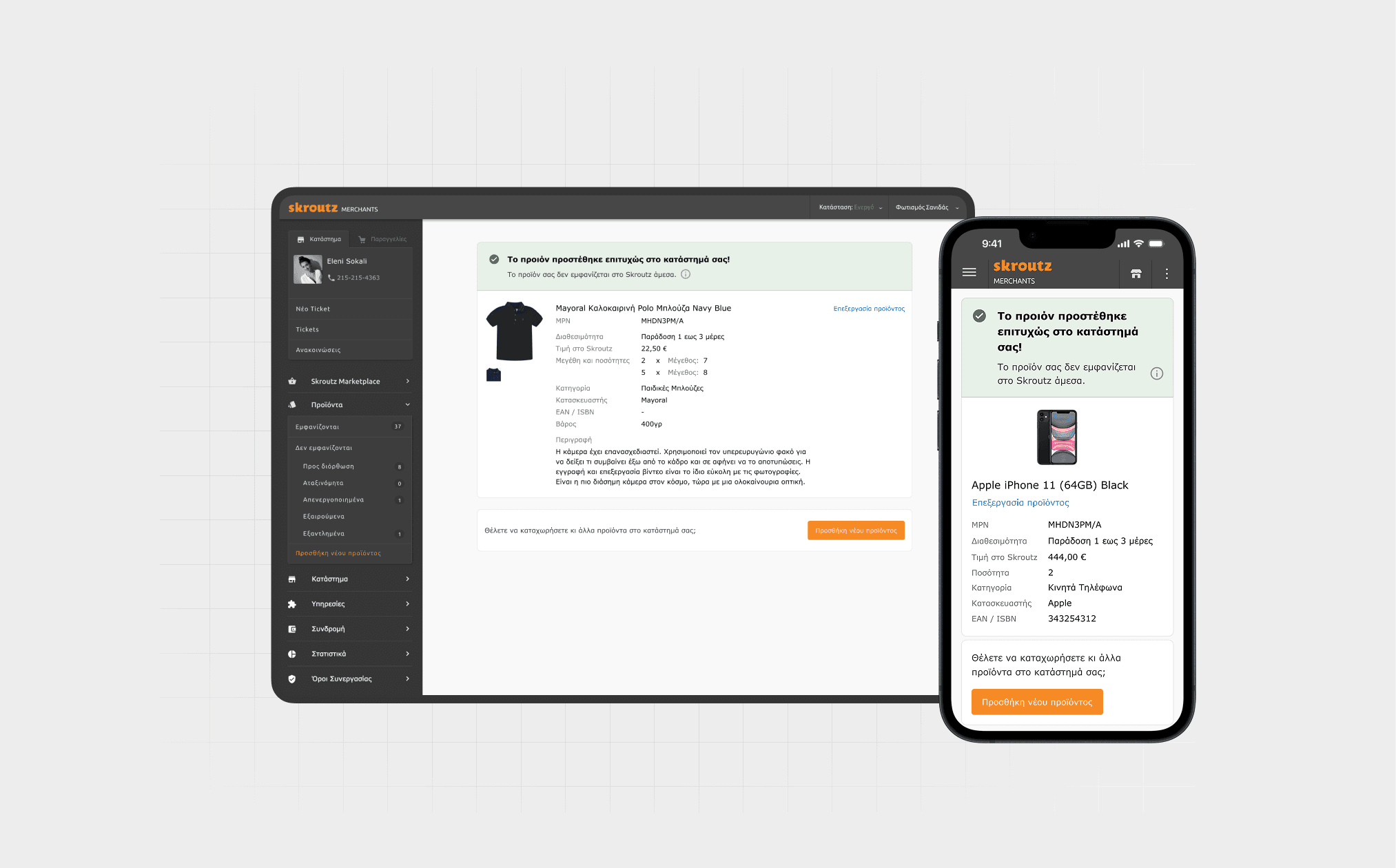
- Key finding from the tests4 of 6 merchants could not see important details on the success screen without scrolling, so it was clear we had to redesign that screen.
- Wider feedbackMerchants were very willing to share their experience with the Skroutz B2B platform so far, including their problems and needs around SKUs and order management, so we could cover them.
Challenge
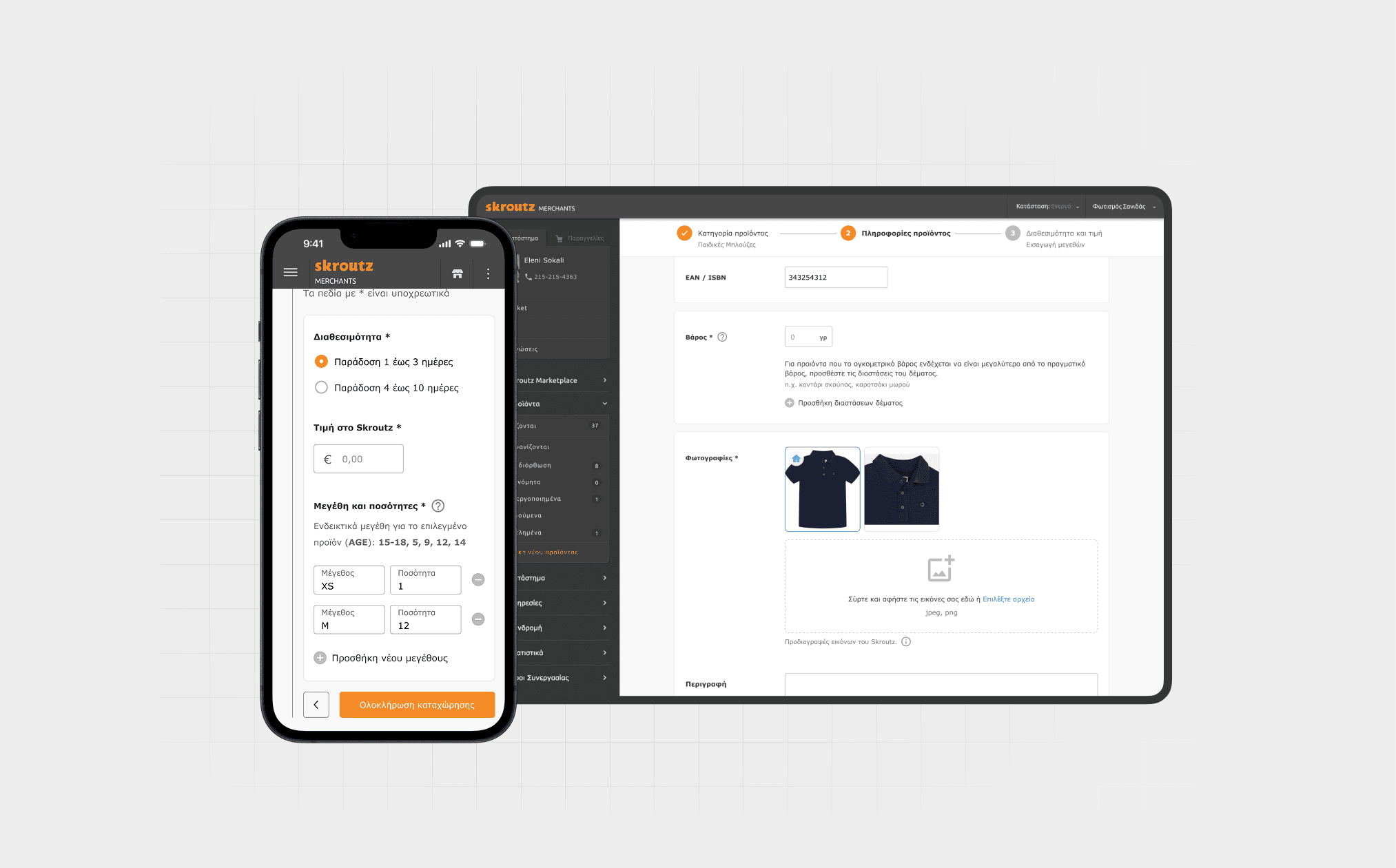
Every product category has its own attributes and logic: a coffee machine and a pair of running shoes have almost nothing in common. One flow had to feel simple and guided for any product, without losing category-specific flexibility.
Solution
Merchants search the Skroutz catalog by product name, MPN, EAN or ISBN, select a match and add their availability, price and quantity.
If the product doesn’t exist, a three-step flow guides them through category, product information and pricing. No spreadsheets, no integrations.
Results & impact
500+ small and medium businesses joined during the pandemic.
Merchants previously needed an XML feed to appear on the marketplace. The manual flow removed that barrier for small and medium merchants, who were less mature technically.
The flow had great appeal, and merchants soon uploaded thousands of SKUs through it.
next project
Prosperty: An MVP to test the need for property marketability reports.