iOS app — Dion · 2024-2026
From zero to 100k+ drinks sent across 5 cities in under 2 years.
An invite-only iOS app where members send a prepaid drink that the recipient redeems at a curated venue.
- 60k+applications
- 30k+active members
- 100k+drinks sent
- 5cities
- $2Mraised at a $20M valuationSummer 2025
Figures as of September 2026.
Problem
Social platforms optimize for engagement, not connection: more follows, messages and notifications, while meaningful relationships get harder to form.
A like or a message costs nothing, so it carries no intent, and the gap between online interaction and real-life connection keeps growing. Nothing in the market was built to close it.
Role & team
I joined in July 2024, before launch, as Product & Founding Designer. The MVP was already built and launched a month later.
I led product and design, working directly with the founders and the CTO.
I mentored 2 junior designers through regular design reviews and pairing, with lots of feedback and questions on their product decisions, pushing them to take ownership.
Approach
Everything we built was a way to verify the product’s market fit and adjust until we actually found it. We shipped early, watched how people really behaved, and cut what didn’t earn its place.
Most feature requests came straight from the founders’ and city managers’ conversations with users, alongside input from investors and support tickets.
I tracked session recordings, which surfaced bugs and interesting behaviors, and shared what I learned with the team, so we could form a more complete picture of what we had in our hands.
After solid user acquisition, we focused much more on data. I worked closely with our data analyst to understand how members behaved and to better define product priorities.
Challenge
Leading product with no PM meant making consequential decisions before the picture was clear: prioritizing features, aligning engineering around a shifting roadmap and keeping quality high under pressure.
I worked in a lot of ambiguity, defining the problem first and understanding what led the founders to certain decisions.
Solution
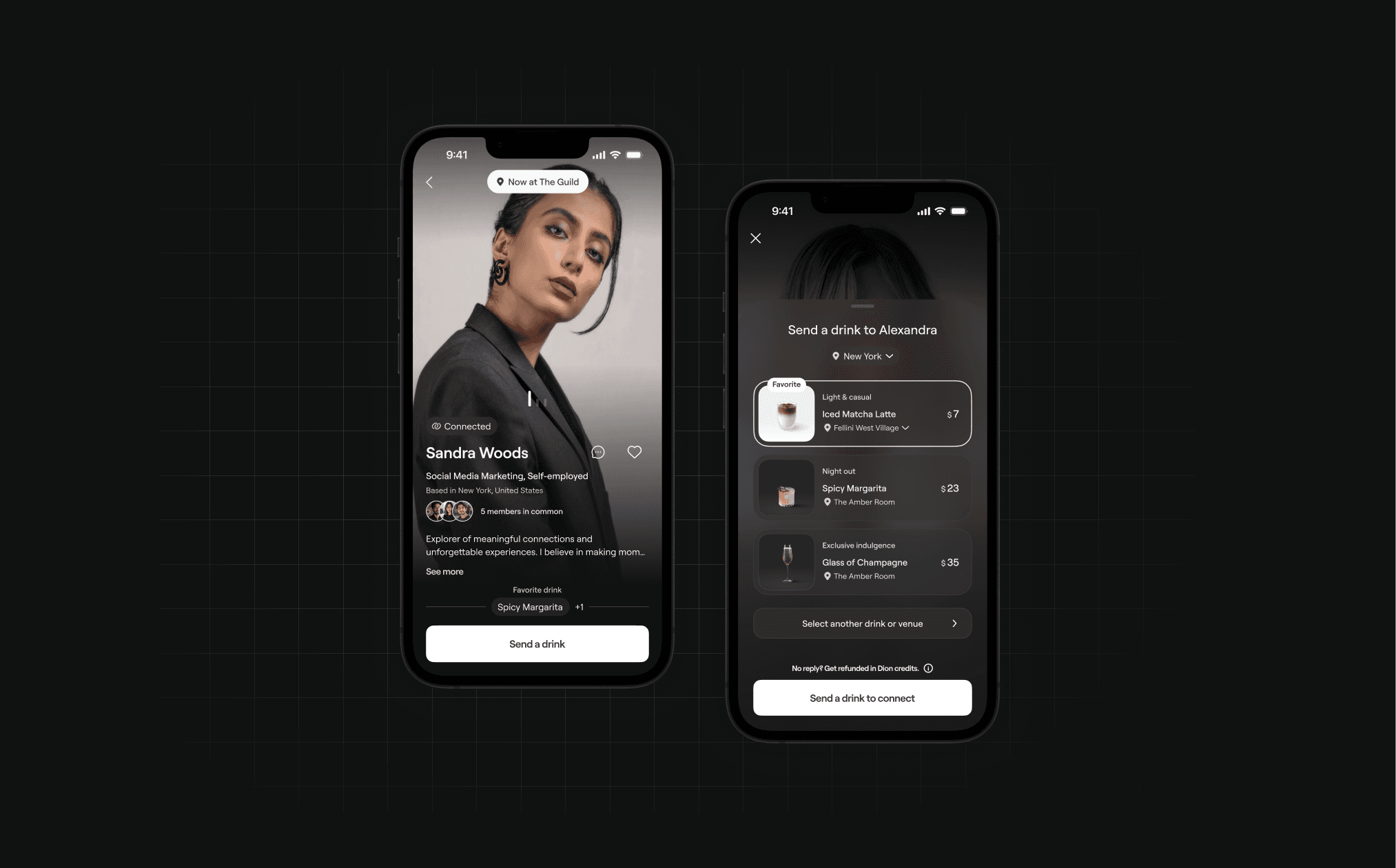
Instead of likes, swipes or DMs, members start a connection by sending a prepaid drink.
A drink adds the intent a message lacks: a small act of generosity that moves the conversation off the screen.
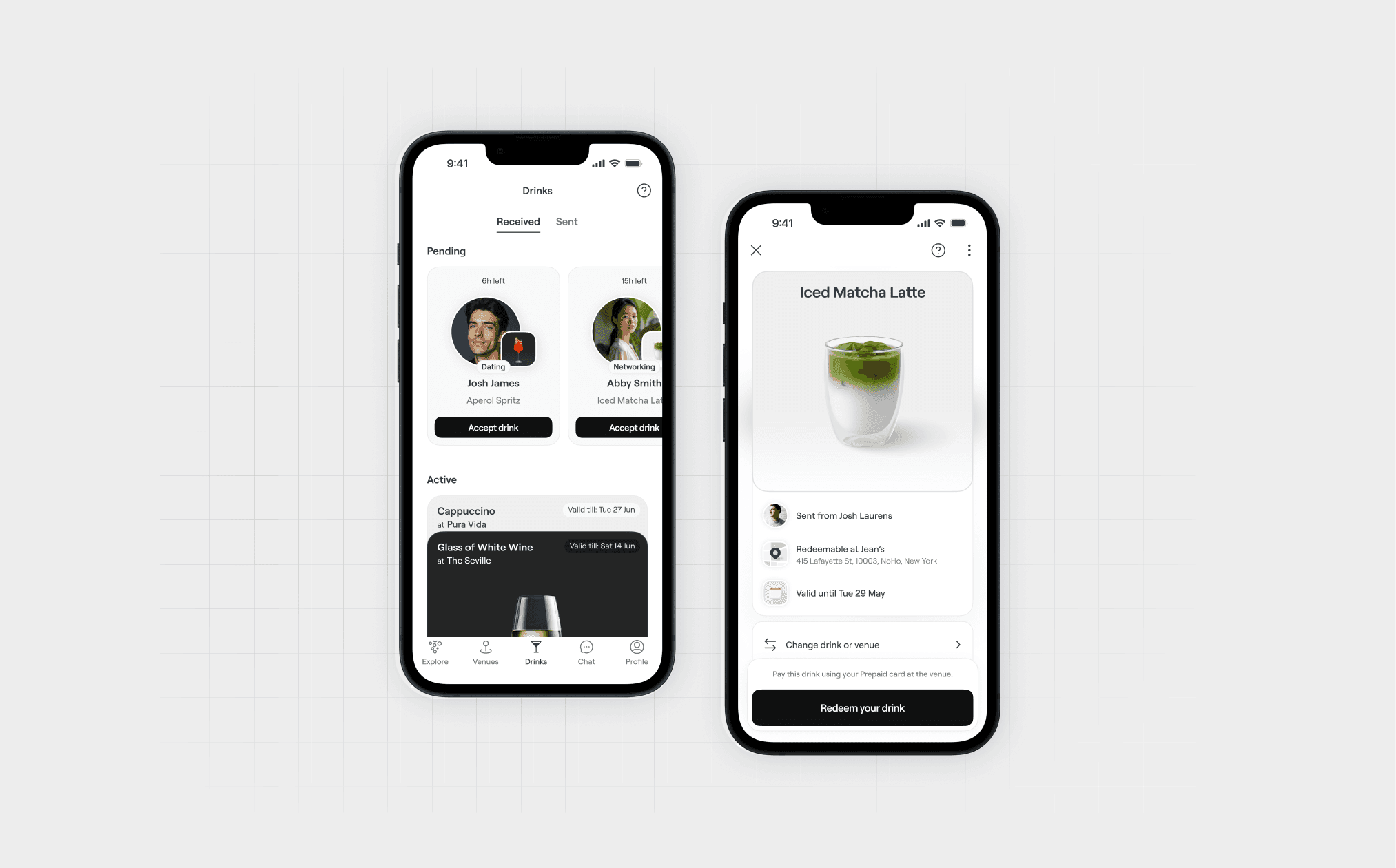
There are two kinds of drink. One is just for the receiver, who redeems it at a curated venue on their own terms. The other comes from the “grab a drink together” feature and is redeemed when both people meet up.
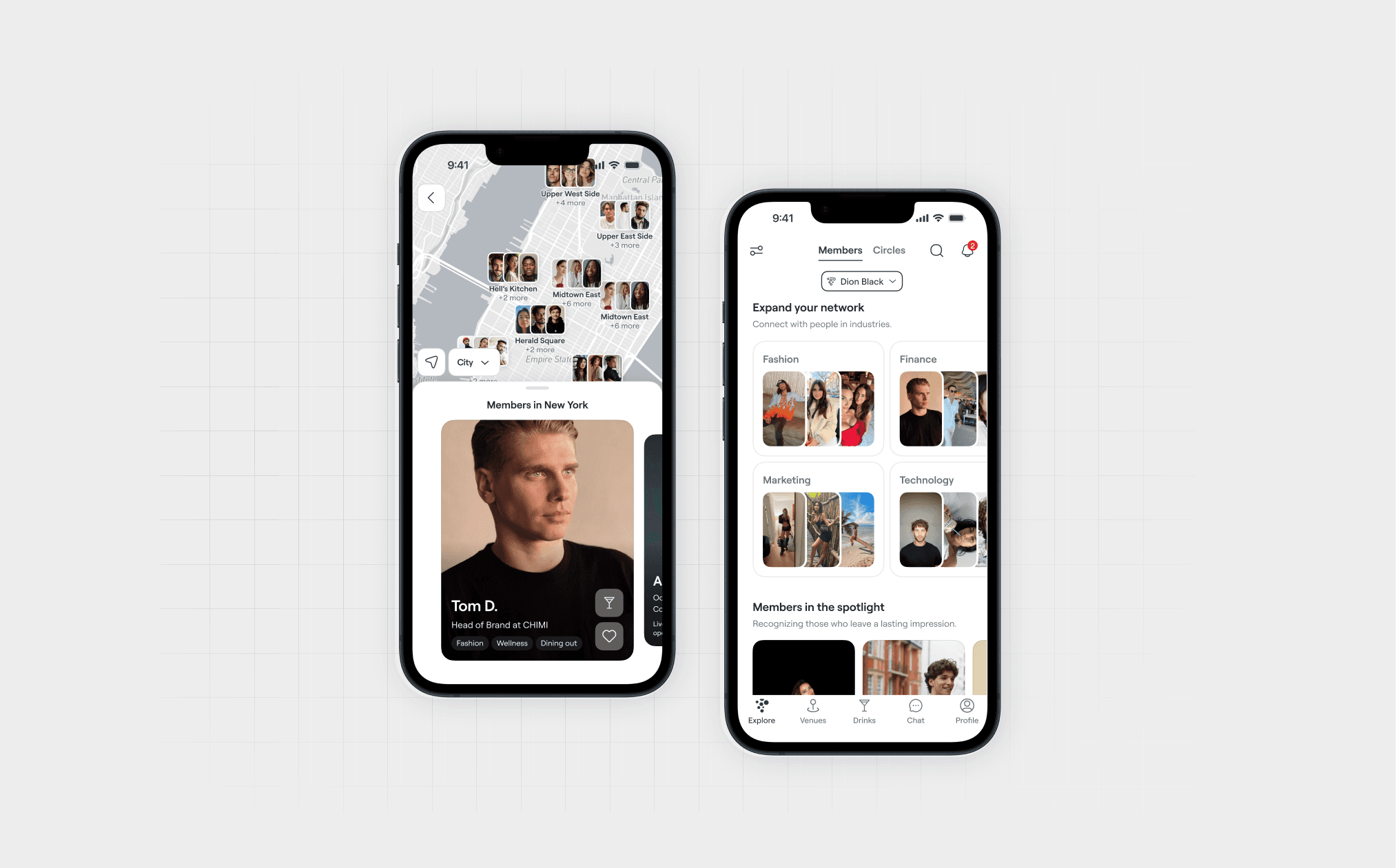
I was the only designer for more than a year, so I designed the whole app, from scratch or as improvements: signup and onboarding, the feed, sending and redeeming drinks, chats, profile and payments.
Key decisions
Circles: shipped, measured, moved on
Circles were closed communities, like members clubs or city groups such as backgammon or city running, where people join with the admin’s approval. The founders and community managers strongly believed in them.
We shipped an MVP and kept improving it, including major enhancements, while it ran for 3-4 months. We still saw low joins and very low drink conversion from people in circles.
Once the data was in, I pushed hard to drop them, and we moved on.
Payments: from venue partnerships to virtual cards
Venue partnerships became a major bottleneck for scaling and operations, so we partnered with a card provider instead: each member gets a virtual card, topped up with the value of the drink at redemption.
Together with the team, I worked out how the new redemption would work, based on the provider’s guidelines and restrictions. Venues are now a curated list, handpicked by Dion for the community’s standards.
Ways of working
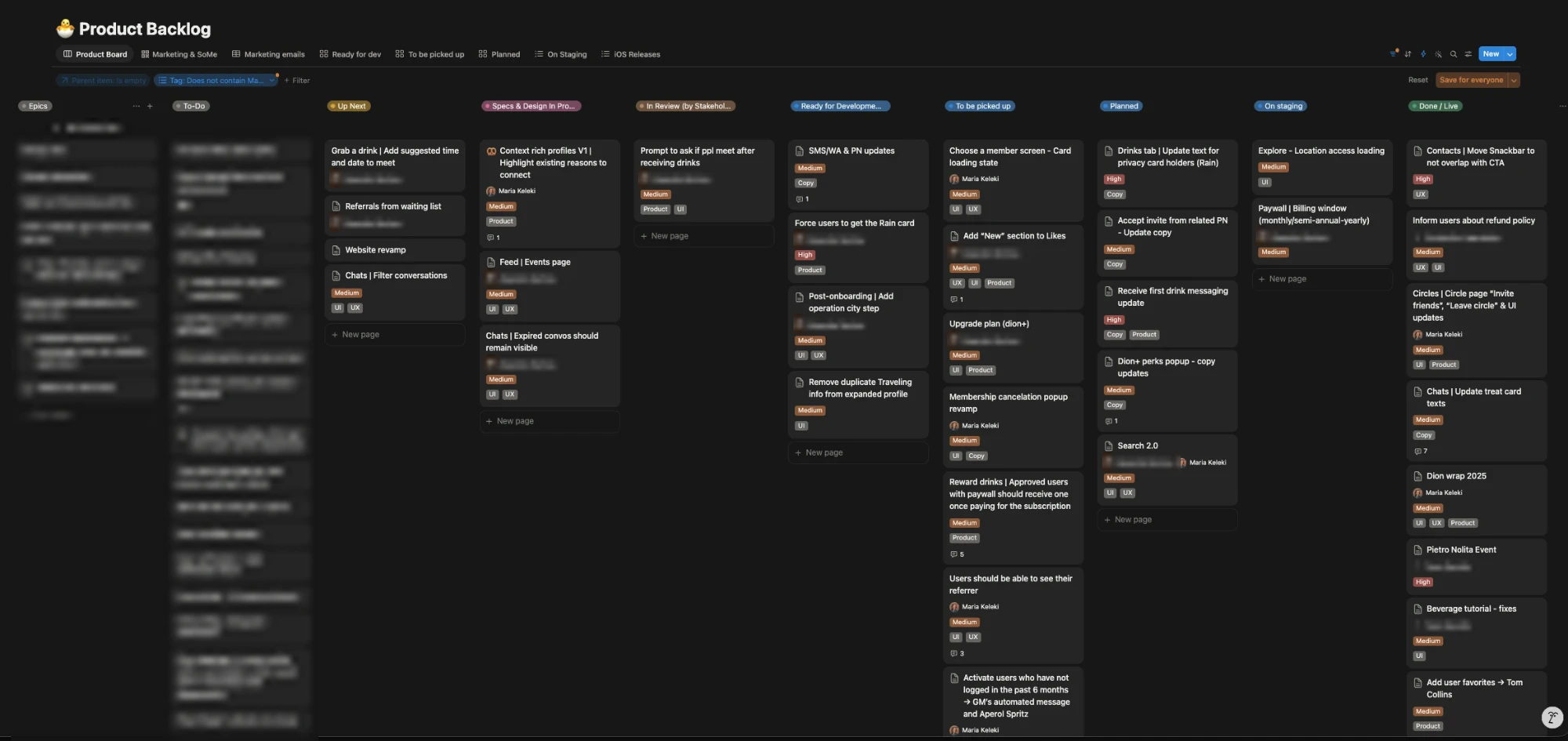
I built the product backlog from scratch in Notion, defined the product-engineering workflow with the lead engineer and kept both maintained.
I used Claude for research and brainstorming, and to write and update the detailed product specs straight in Notion for the developers.
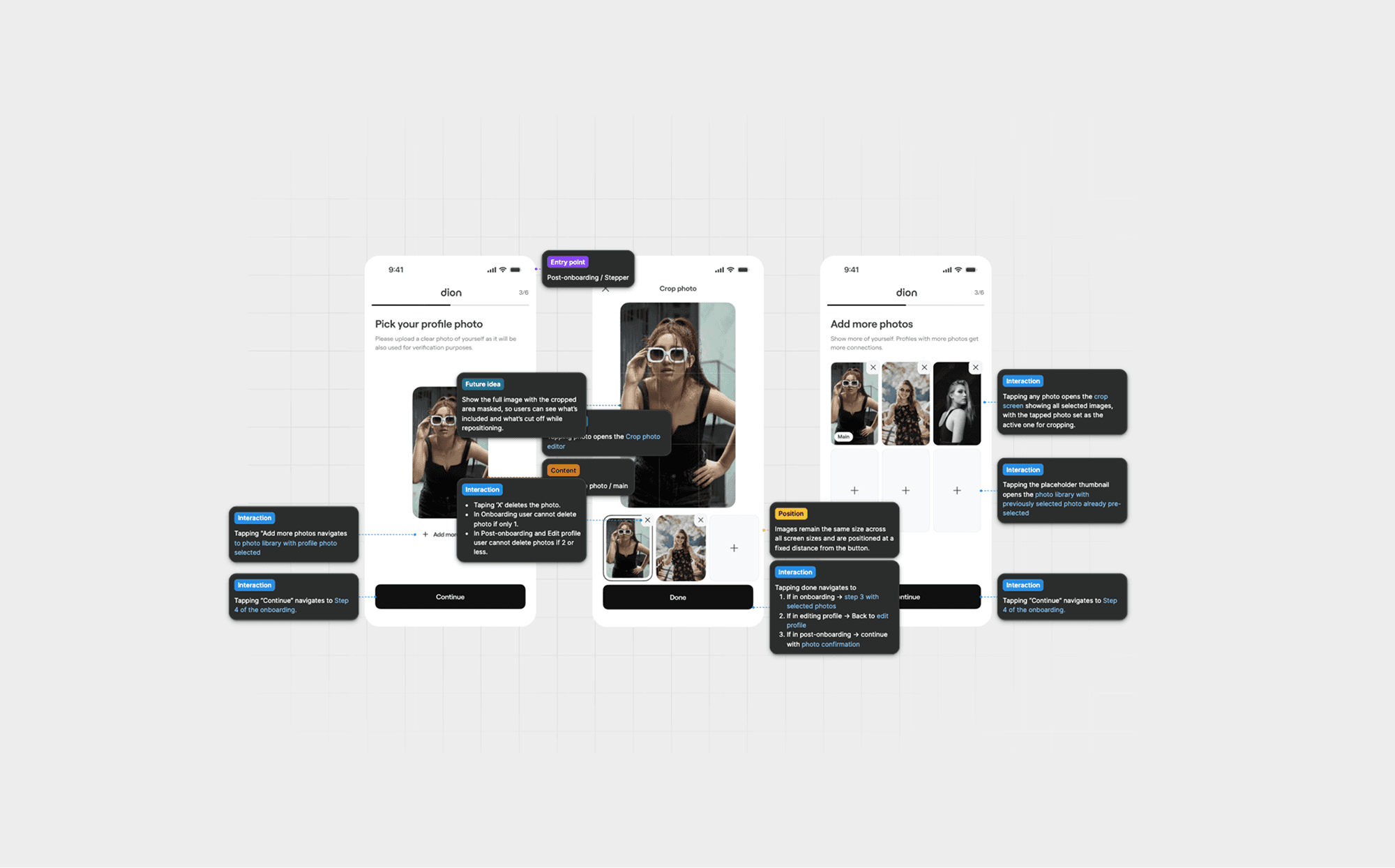
In Figma, I added annotations for anything that needed more detail, such as content, interactions and dev specs.
I also organized Figma, created and maintained all the source files, mirroring the live app, and built on the starting version of the design system.
QA on staging played an important role in making sure everything worked as expected.
Builds went out through TestFlight, with feature flags where needed, so we could test with team members and ambassadors first.
Results & impact
90% of approved members who completed onboarding have sent at least 1 drink, with a 70% unlock rate: a recipient accepts a drink by replying to the sender’s message.
The card-provider model made launching in 3 more cities easier, with less operations work, for 5 main cities in total. It also supported 4 summer pop-up cities on top of those.
City managers who asked users for feedback got very enthusiastic responses to the experience, and users also texted our founders directly to say so.
next project
Moving Doors: One app for the whole stay, launching November 2026.